Welcome to Yibi Jewelry

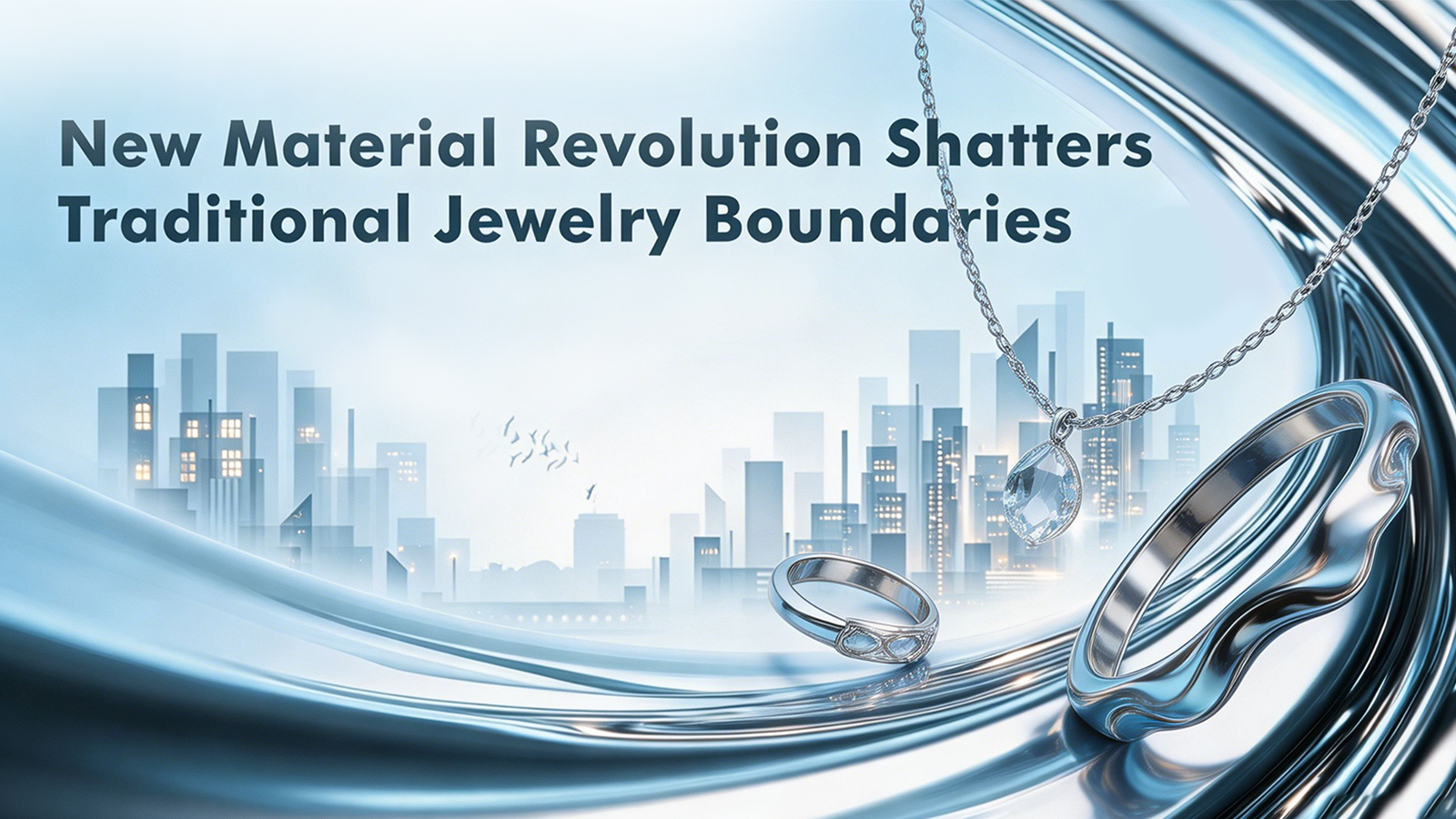
For a long time, the jewelry market has been dominated by precious metals such as gold and silver, as well as natural gemstones including diamonds and jadeite, forming a solidified structure centered on material value, supported by value preservation properties, and focused on ceremonial scenarios. In recent years, stainless steel material has rapidly penetrated the global jewelry market with its unique advantages. It brings not just simple product substitution, but a comprehensive impact on consumer perception, market structure, product logic and industry competition. While exerting operational pressure on traditional jewelry, it also forces the industry to iterate and upgrade, deserving in-depth examination by traditional jewelry enterprises.
The rise of stainless steel jewelry is centered on the dual adaptation of material characteristics and process upgrading to current global consumer demands.
Material Performance Directly Addresses Pain Points316L medical-grade stainless steel features high hardness, corrosion resistance, and resistance to deformation and fading. It requires no deliberate maintenance and offers excellent hypoallergenic properties, covering sensitive skin groups and solving the pain points of traditional precious metal jewelry that is prone to oxidation and requires regular maintenance. Data shows that approximately 48% of global fashion jewelry online transactions focus on stainless steel products with waterproof and sweat-resistant properties, and their practicality is widely recognized by the market.
Affordable Price Aligns with Market DemandWith sufficient raw material supply and mature processes, retail prices are 30%–60% lower than traditional precious metal jewelry, achieving an affordable luxury experience that matches the core demand of young groups for “low-cost beauty enhancement”.
Process Iteration Breaks Through LimitationsContinuous updating and iteration of stainless steel processes and the maturation of precision processing technology enable this material to create more exquisite and complex jewelry shapes, breaking through the texture limitations of traditional stainless steel jewelry. It achieves dual breakthroughs in design and craftsmanship in earrings, necklaces, light luxury accessories and other products, significantly broadening the boundaries of product innovation.
Scenario & Channel AdaptationThe material has strong ductility and can present rich color systems through diverse processes, adapting to all scenarios including daily commute and breaking away from the limitation of traditional jewelry that “emphasizes ceremony but neglects daily use”. With the help of e-commerce, live streaming and other channels, it precisely reaches the core consumer group aged 18–35. The proportion of global online sales channels has climbed to 45%, showing a strong development momentum.
Traditional jewelry’s core revenue relies on the mid-end mass market. Stainless steel jewelry precisely targets this market and quickly diverts global customers with its high cost-performance ratio and strong practicality. Young consumer groups pay more attention to decorativeness, personalization and convenience, with reduced attention to value preservation. The proportion of 18–35 age group purchasing gold jewelry has plummeted from 42% in 2018 to 17% in 2025.
The shortcomings of traditional mid-end jewelry, such as high prices and susceptibility to oxidation, have become prominent. Penetration in the young market has declined, some small and medium-sized brands are facing operational difficulties, and even leading brands are struggling with sluggish growth in young customer sources. Meanwhile, stainless steel jewelry is testing the waters in the high-end market. The global stainless steel jewelry market size is expected to reach USD 2.71 billion in 2026, posing a potential threat.
Traditional jewelry has long conveyed the perception that “the more precious the material, the higher the value”, equating jewelry with status symbols and investment products. Stainless steel jewelry shifts the core value to design, craftsmanship and practicality, conveying the concept that “high-quality jewelry can be owned at an affordable price”.
It promotes the trend of daily jewelry use, making “practicality” and “personalization” replace “value preservation” as the core consumer demands of young groups. In 2025, the global search volume for the keyword “custom jewelry” increased by 240% year-on-year, with Generation Z and post-2000 users accounting for 67%, confirming this perception shift. In the same period, the global waterproof jewelry market size grew by 38% year-on-year, with stainless steel waterproof jewelry becoming the core driving force for the growth of this category with its excellent practicality.
In addition, its recyclable and low-pollution characteristics promote the popularization of sustainable consumption concepts, exerting pressure on the environmental shortcomings of traditional jewelry.
Traditional jewelry has conservative styles, single scenarios and unreasonable price gradients. The advantages of stainless steel jewelry force its iteration and upgrading: global leading brands have launched affordable daily models, deployed stainless steel accessories, increased design investment, learned from its craftsmanship and expanded daily scenarios.
Meanwhile, stainless steel jewelry lowers industry entry barriers, and emerging brands and fast fashion brands have entered the market one after another. The global stainless steel jewelry market continues to expand, with earrings accounting for 45%, showing significant market growth. Industry competition has shifted from material monopoly to a diversified pattern of design, cost-performance ratio and channels, and the monopoly advantages of traditional jewelry continue to weaken.
The impact of stainless steel on traditional jewelry is two-way empowerment:
The two are not complete substitutes but complementary symbiosis: traditional jewelry occupies the high-end market and ceremonial scenarios with material scarcity and value preservation; stainless steel jewelry occupies the low-to-mid-end market and daily scenarios, enriching global market supply and promoting the industry to enter a diversified development stage.
The global jewelry market will present a trend of diversification in materials, values and scenarios in the future. Stainless steel and traditional precious metals will coexist for a long time, with competition core shifting to design, craftsmanship, brand and service.
According to forecasts, the global stainless steel jewelry market size will reach USD 6.8 billion by 2032, with a CAGR of approximately 7.31%. Calculated based on the global stainless steel jewelry market size of approximately USD 4.2 billion in 2025 and an estimated USD 2.71 billion in 2026, this growth rate matches the pace of global market expansion, showing a robust development trend.
Overall, stainless steel material has broken the global monopoly pattern of traditional jewelry and promoted the marketization and rejuvenation of the industry. Whether it is stainless steel or traditional jewelry, only by basing on consumer demand and continuous innovation can sustainable development be achieved.