I. Market Truth: This Is Not a Fad—It’s a Consumption Logic Reset
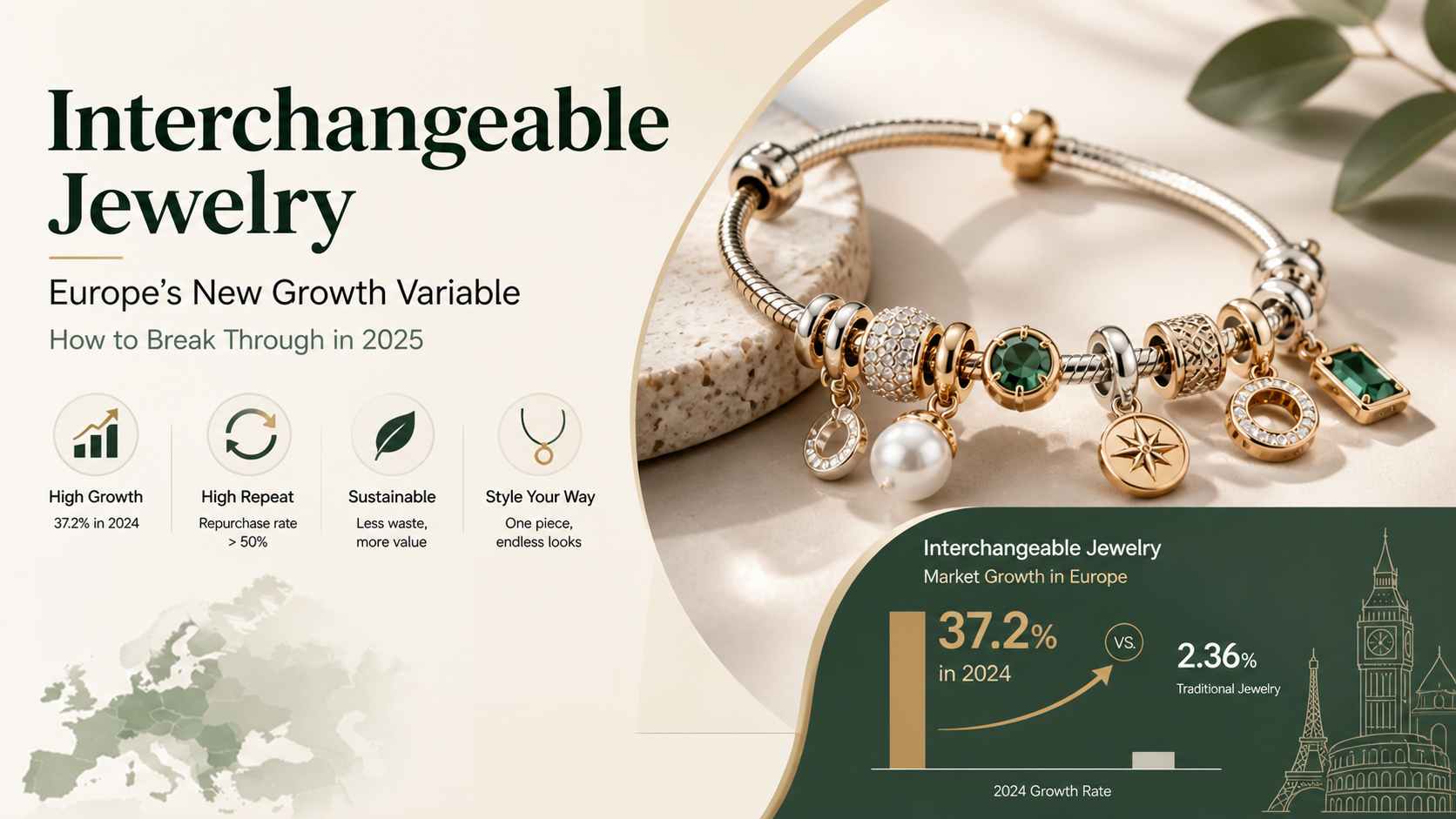
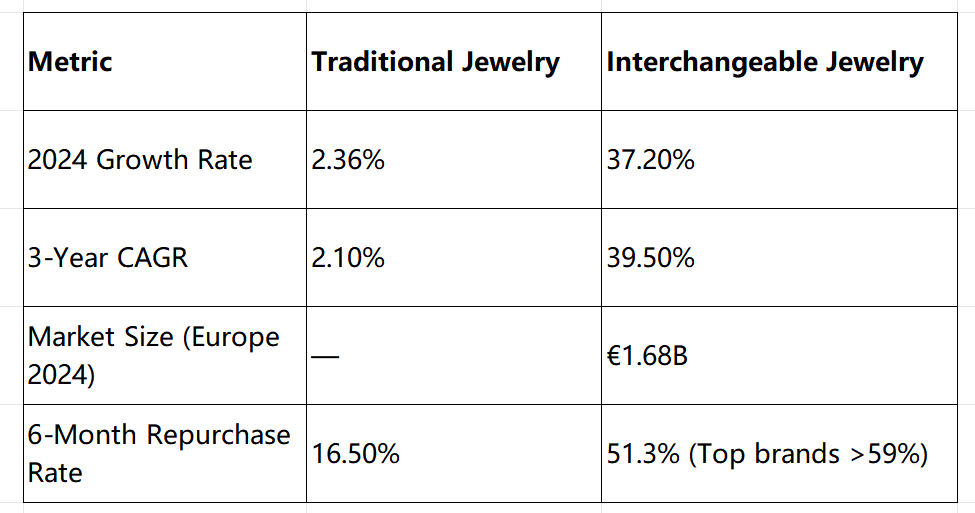
Interchangeable jewelry has rewritten the rules of European jewelry consumption, shifting from “one-time high-value purchase” to “continuous low-frequency repurchase.” Its core advantage lies in unmatched customer lifetime value (LTV), which is 3–4x higher than conventional fast-fashion jewelry.
Who Is Driving This Growth?
- Gen Z/Alpha (66% of spending): Prioritize niche light luxury and weekly styling updates, willing to pay for personalized combinations
- Urban Professionals (24%): Value versatility across office, casual, and travel scenarios, prefer minimalist high-quality bases
- Mature Consumers (10%): Adopt interchangeable pieces for gifting and understated everyday luxury
The market has evolved beyond early adopters: Eastern and Southern Europe now account for 38% of regional sales, up from 22% in 2022, signaling mainstream penetration.
II. Three Non-Negotiable Needs Reshaping European Jewelry Value
The boom is not driven by novelty—it solves three fundamental pain points that traditional jewelry has never addressed:
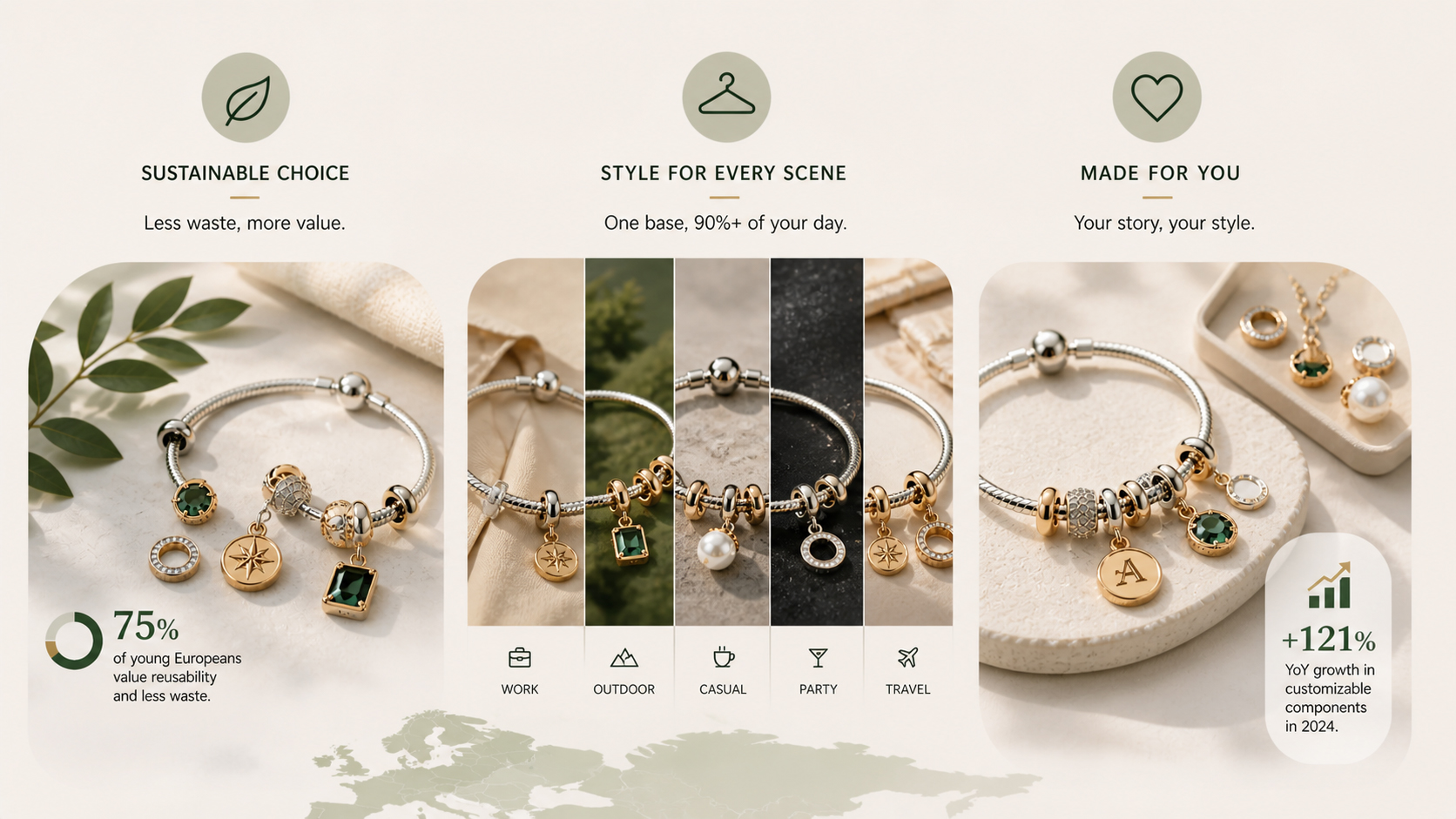
- Sustainable Consumption: Ending Wasteful Aesthetic Purchases 75% of young European consumers cite “reducing waste” as their top reason for choosing interchangeable jewelry. The average European owns 11+ fashion jewelry pieces, but only 22% are worn regularly. A single base + 5 interchangeable accents can create 25+ unique looks, cutting consumer spending by 60% while reducing textile and metal waste.
- Cross-Scenario Styling: One Piece for All Lifestyles Young Europeans navigate 5+ distinct daily scenarios (office, camping, parties, travel) that demand different aesthetics. Fixed jewelry cannot adapt, but interchangeable designs switch between minimalist, vintage, and street styles in 10 seconds. Top brands report that 82% of buyers use their pieces across 3+ scenarios.
- Anti-Homogenization: Jewelry as Personal Identity European consumers reject mass-produced trends. Interchangeable jewelry allows custom combinations with birthstones, engravings, and symbolic motifs, turning accessories into carriers of personal memory. Sales of customized components grew 121% in 2024, outpacing standard pieces by 3x.
Critical Industry Myth Busting
❌ Myth: Interchangeable jewelry is low-end fast fashion ✅ Fact: Top brands achieve 65% gross margins, with premium components selling for €50–€150 each. The category has already moved beyond budget tiers into light luxury.
❌ Myth: Any detachable design will sell ✅ Fact: 90% of product returns stem from poor interface design and quality issues, not styling preferences.
III. 90% of Brands Fail: Four Hidden Bottlenecks
Rapid growth has exposed structural flaws that prevent scaling and premiumization:
- No Unified Industry Standards: Interfaces, sizes, and structures are brand-exclusive, limiting consumer choice and raising supply chain costs by 30–40%.
- Unstable Quality Control: Detachable mechanisms (magnetic, snap, screw) are core functional and structural weak points. 2024 e-commerce after-sales data shows related complaints mainly focus on loosening, falling parts, oxidation and interface mismatch. The industry’s average defect rate for interchangeable jewelry is far higher than that of conventional fixed jewelry, resulting in increased after-sales pressure and weakened brand loyalty.
- Broken Pricing Models: Low-cost bases with 300% markup on limited-edition components push 47% of users to third-party alternatives.
- Lack of High-End Design: Overly complex modular structures compromise elegance, keeping 96% of the market below the €200 price point.
IV. 2025 Breakthrough Strategies: From Growth to Profitability
The era of wild expansion is over. Winning brands will focus on refined operations and supply chain optimization:
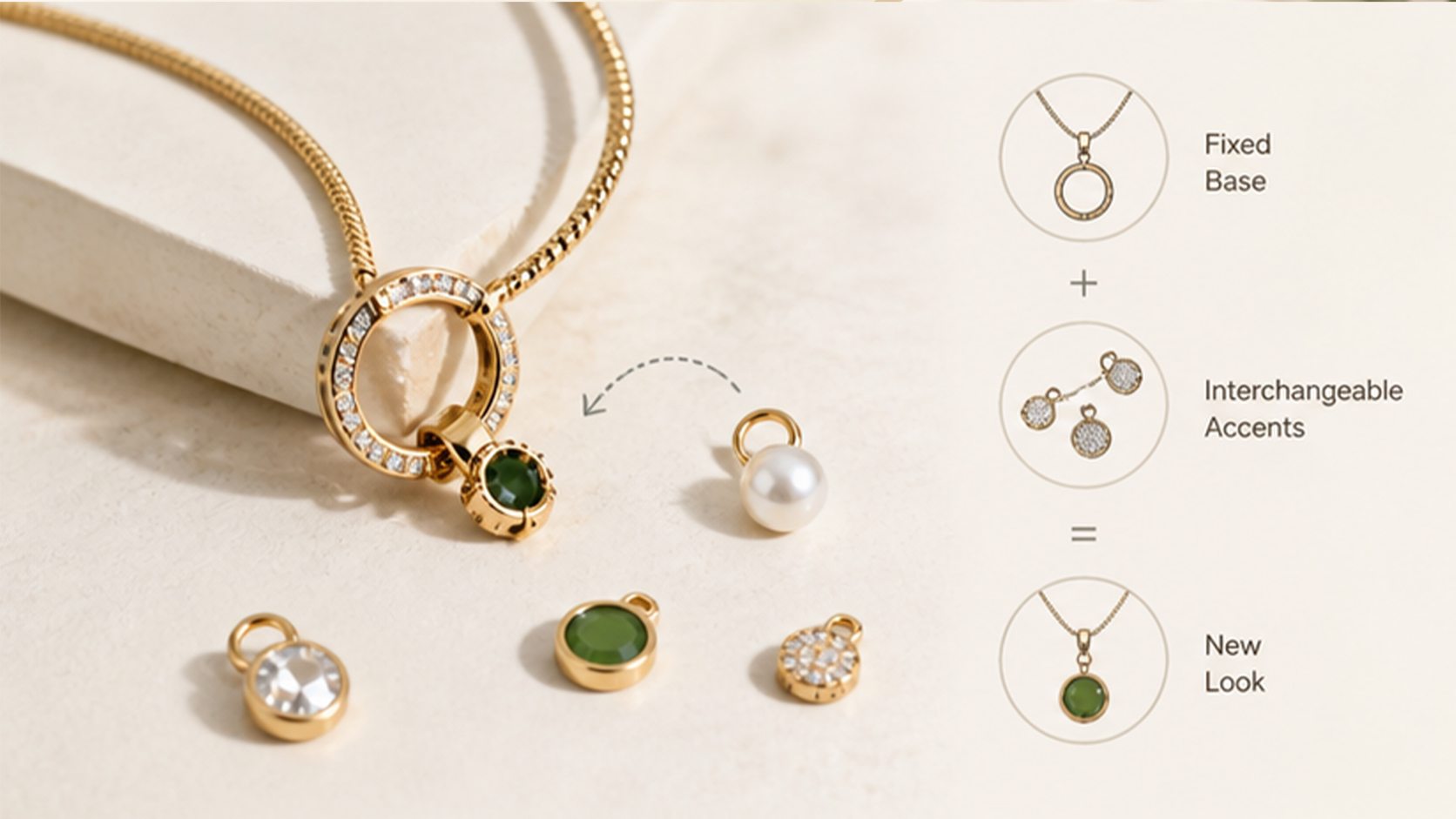
- Adopt Semi-Modular Design: Replace full modularity with fixed bases + partially interchangeable accents, balancing aesthetics, durability, and personalization.
- Build Open Interface Ecosystems: Collaborate with suppliers to develop cross-brand compatible standards, reducing R&D costs and expanding consumer choice.
- Prioritize Supply Chain Quality: Invest in precision manufacturing and 100% full inspection to lower defect rates below 1%.
- Target High-Growth Niches: Men’s minimal interchangeable jewelry (49% 2024 growth), outdoor durable designs, and Chinese-style crossover pieces offer the highest untapped potential.
Conclusion
Interchangeable jewelry is not disrupting high-end jewelry—it is filling the massive gap in everyday fashion accessories. By solving the core problems of waste, poor versatility, and homogenization, it aligns perfectly with Europe’s shift toward rational, personalized, and sustainable consumption.
As a precision hardware partner for leading European luxury brands, we have developed a mature universal interchangeable interface system that solves the industry’s most common pain points. Our components adopt 99.9% true gold magnetron sputtering PVD coating and follow strict 100% full inspection standards, with a stable controlled defect rate of 0.3%, delivering significantly more reliable quality than the industry average. We help mid-to-high-end jewelry brands quickly launch standardized, high-quality interchangeable jewelry lines within 8–12 weeks, avoiding cumbersome independent R&D processes and effectively optimizing brand launch cycles and comprehensive costs.