In the global consumer goods market, material safety has once again moved to the forefront. With increasingly strict regulations and rising expectations for sustainability and transparent supply chains, material compliance is no longer a passive requirement—it directly shapes brand trust and long-term growth.
Material Safety Is Being Re-Evaluated
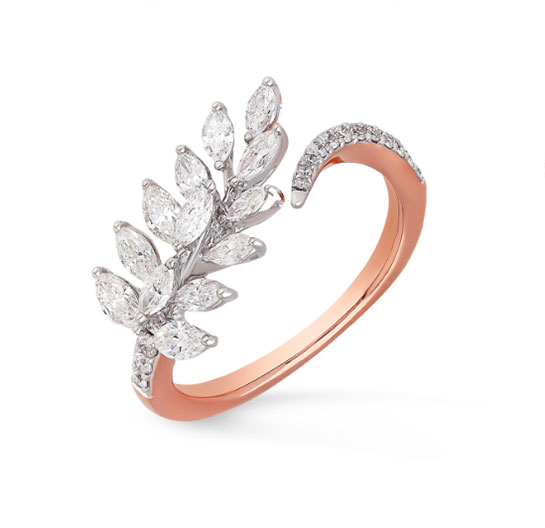
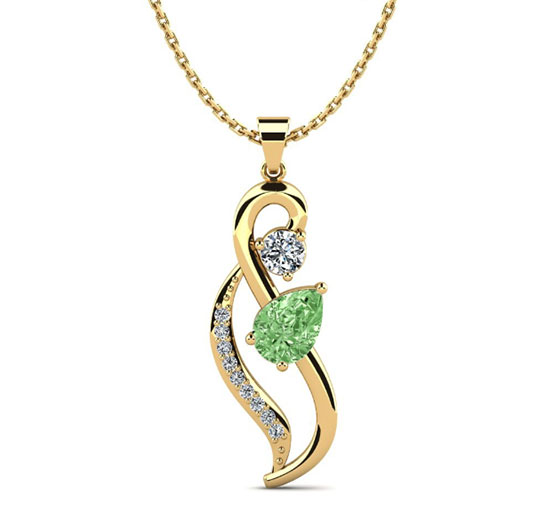
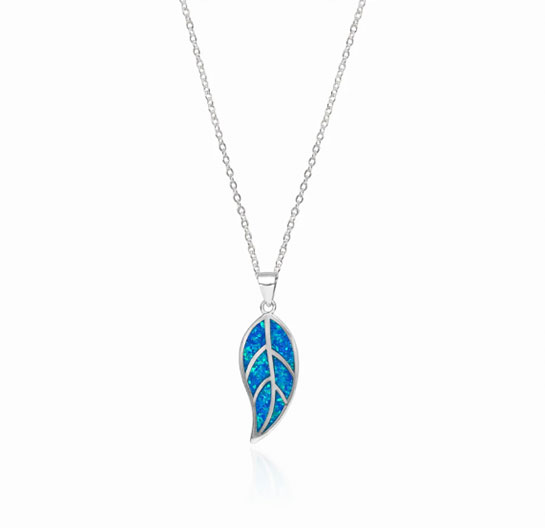
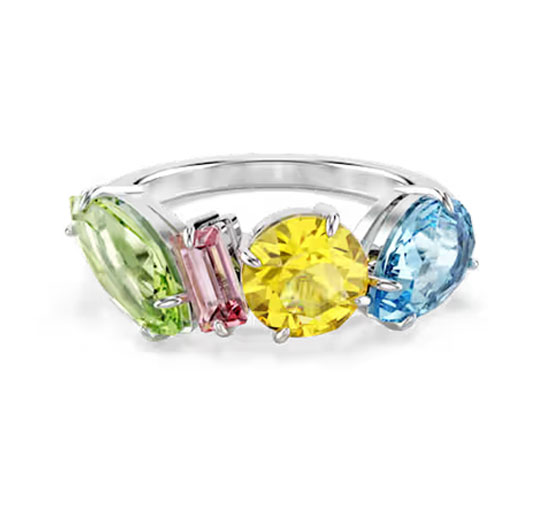
Across jewelry and fashion hardware (bag, belt, and accessory components), material compliance has become a critical point of brand differentiation.
Yet several industry risks still persist:
- Excessive nickel release or lead content leading to sensitivity complaints
- Sweat corrosion causing discoloration or rust, harming the brand experience
- Strict overseas supply-chain audits—non-compliance can trigger recalls
Which brings us back to the core message:
Material compliance = the foundation of brand safety It is not optional—it’s the baseline for credibility and sustainable development.
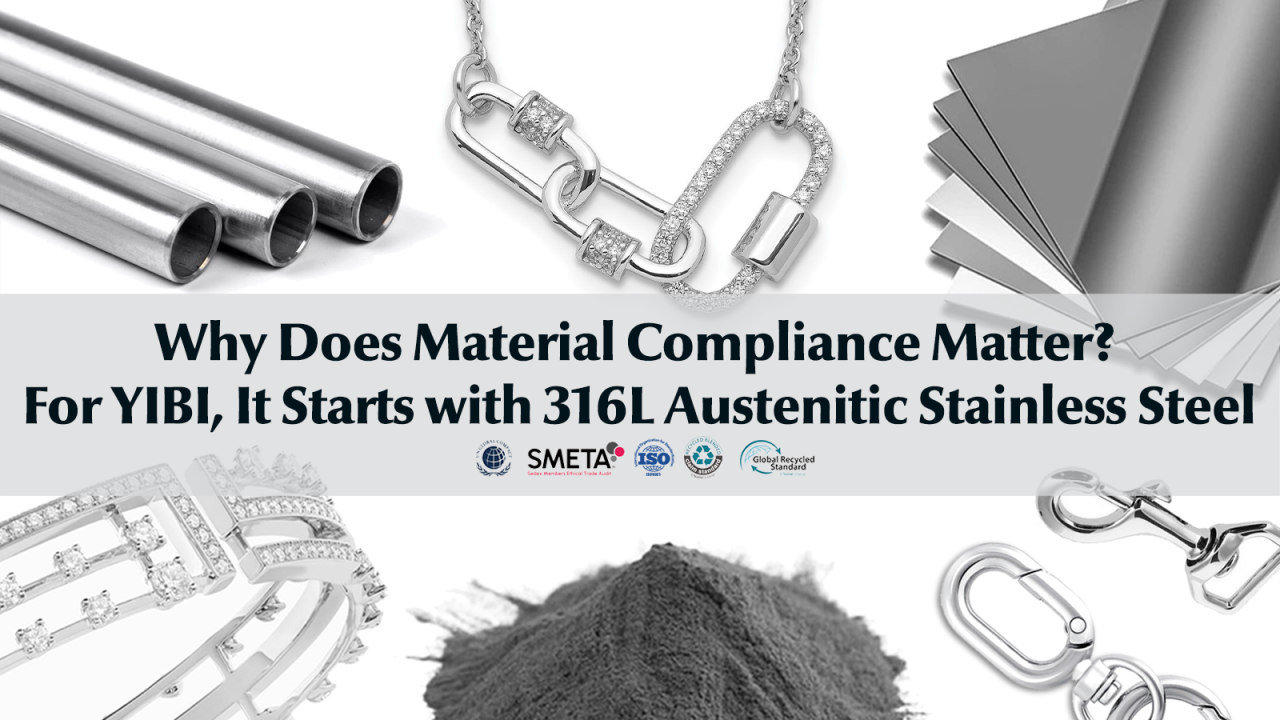
Why Austenitic Stainless Steel Is the Preferred Choice for Global Premium Brands
Austenitic stainless steels (316/316L/J3L) have long been central to premium brand supply chains. Their position is the result of comprehensive advantages:
- Stable chemical composition for low-allergenic performance The austenitic structure and controlled nickel content ensure corrosion resistance and low ion migration—ideal for skin-contact goods.
- Excellent corrosion resistance for real-life wear scenarios 316L performs exceptionally in chloride environments, making it the first choice for waterproof jewelry and active-wear applications.
- Strong mechanical properties for high-precision manufacturing & mirror finishing Its refined structure ensures consistent results in MIM, CNC, polishing, stamping, and PVD—delivering higher stability and better yields.
- Inherently aligned with responsible supply-chain systems Austenitic stainless steel offers strong traceability and meets RJC, GRS, and RCS requirements—supporting brand transparency in sourcing, sustainability, and product safety.
These attributes have made austenitic stainless steel the default material for high-end brands, defining the industry’s quality baseline.
YIBI’s Material Selection Standards: Setting a Higher Benchmark
With 16 years of metal manufacturing experience, YIBI has developed a material evaluation system stricter than industry norms. Every batch must meet the following criteria:
- Compliance first: Powered by RJC + GRS/RCS systems Materials follow RJC chain-of-custody standards and support GRS/RCS recycled content, ensuring transparent, safe, and traceable sourcing from the origin.
- Fully traceable material sourcing Each batch is traceable with stable, consistent composition—aligning with premium brand requirements for responsible supply chains.
- Material selection matched to process characteristics YIBI selects materials optimized for CNC, polishing, stamping, MIM, and PVD to ensure production stability and premium end-product results.
- Safety prioritized over cost Material choice is not only the start of product quality—it is the bottom line of brand reputation.
Material Compliance Is Not a Trend—It’s a Competitive Advantage
As the market shifts toward quality-based competition, material compliance + manufacturing capability + transparent responsible supply chains will define true brand differentiation.
YIBI will continue upholding high-standard material systems, delivering more stable, transparent, and safe metal solutions—and helping brands build long-term trust in global markets.