Welcome to Yibi Jewelry

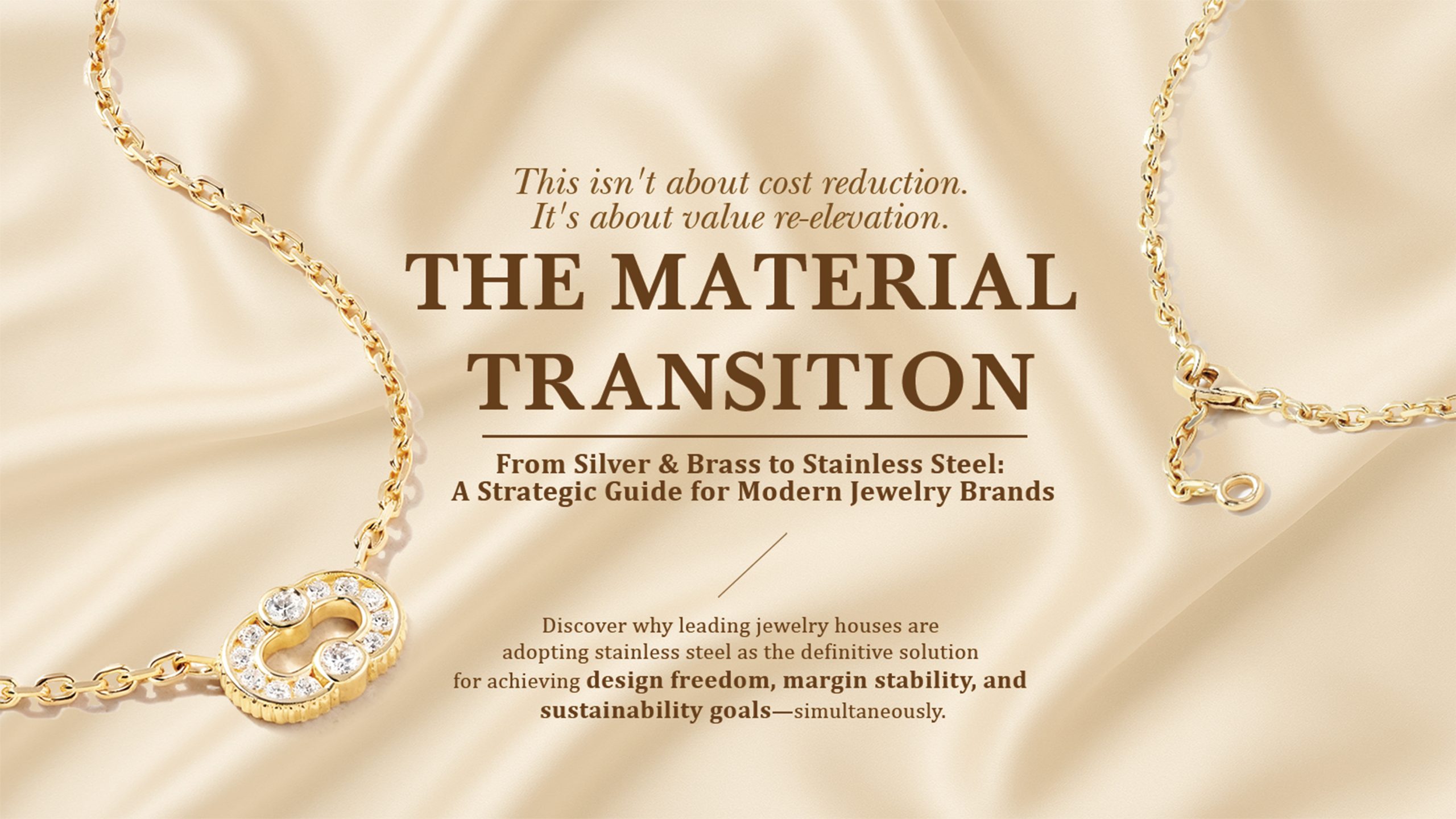
In jewelry, materials define not only beauty, but values.
For decades, silver and brass have been the backbone of fashion and fine jewelry — elegant, workable, and synonymous with traditional luxury.
But a quieter, more fundamental shift is taking place:
More brands are moving from traditional metals to stainless steel.
What began as a cost decision has evolved into a strategic transformation, redefining how brands approach design, durability, and sustainability.
The jewelry industry faces a convergence of pressures:
The jewelry world is shifting from a “preciousness mindset” to a “performance and purpose” mindset.
From a production perspective, stainless steel offers a rare balance of economic logic and performance stability.
| Material | Raw Material Cost (50g) | Plating Requirement | Price Volatility | Maintenance |
| 316L Stainless Steel | ~$0.14 | Optional (PVD) | Low | Minimal |
| Silver (925) | ~$55.50 | Required | High | High |
| Brass | ~0.50–1.00 | Required | Medium | High |
Stainless steel maintains stable market pricing, requires no thick plating, and ensures predictable profit margins.
Meanwhile, the PVD (Physical Vapor Deposition) process — now replacing electroplating in many applications — forms a denser, harder, and eco-friendly coating, greatly improving wear and color retention.

The stereotype of stainless steel being “cheap” has been overturned by modern technology.
Today’s 316L steel achieves micron-level precision, rivaling the polish and reflectivity of silver and even white gold.
| Property | Stainless Steel (316L) | Silver (925) | Brass |
| Hardness (HV) | 200–500 | 70–90 | 100–120 |
| Tarnish Resistance | Excellent | Moderate | Low |
| Scratch Resistance | Excellent | Fair | Fair |
| Hypoallergenic | Yes | Partial | No |
| Color Range (PVD) | Silver / Gold / Champagne / Rose | Silver / Gold / Champagne / Rose | Silver / Gold / Champagne / Rose |
Thanks to PVD coatings, stainless steel can achieve the warmth of gold, the brilliance of silver, or even new hybrid tones.
Combined with CNC machining and laser polishing, it surpasses traditional metals in precision, consistency, and durability.
It’s no longer a substitute — it’s a design material in its own right.
Leading brands are adopting stainless steel not because it’s cheaper — but because it’s smarter.
Key strategic drivers:
Stainless steel is evolving from a “substitute option” into a strategic material choice for brands.
As more jewelry brands explore stainless steel as a long-term material strategy, one question keeps coming up:
Where should we start?
Based on YIBI’s experience supporting global jewelry houses, here are several practical entry points — and how leading brands have made the transition step by step.
The safest way to begin is by replacing small functional parts such as closure, clasps, ear caps, chain connectors, screws, or pins.
These components have:
Stainless steel offers superior metallic properties, significantly improving the durability of functional components in products.
This lets brands test how stainless steel performs in texture, machining precision, and coating stability before applying it more widely.
Among YIBI’s clients, a well-known European jewelry brand began by replacing the closure of its signature bracelet — originally made of copper prone to metal fatigue — with stainless steel.
The result? Stronger durability, improved color stability, and a noticeable lift in both product perception and customer satisfaction.
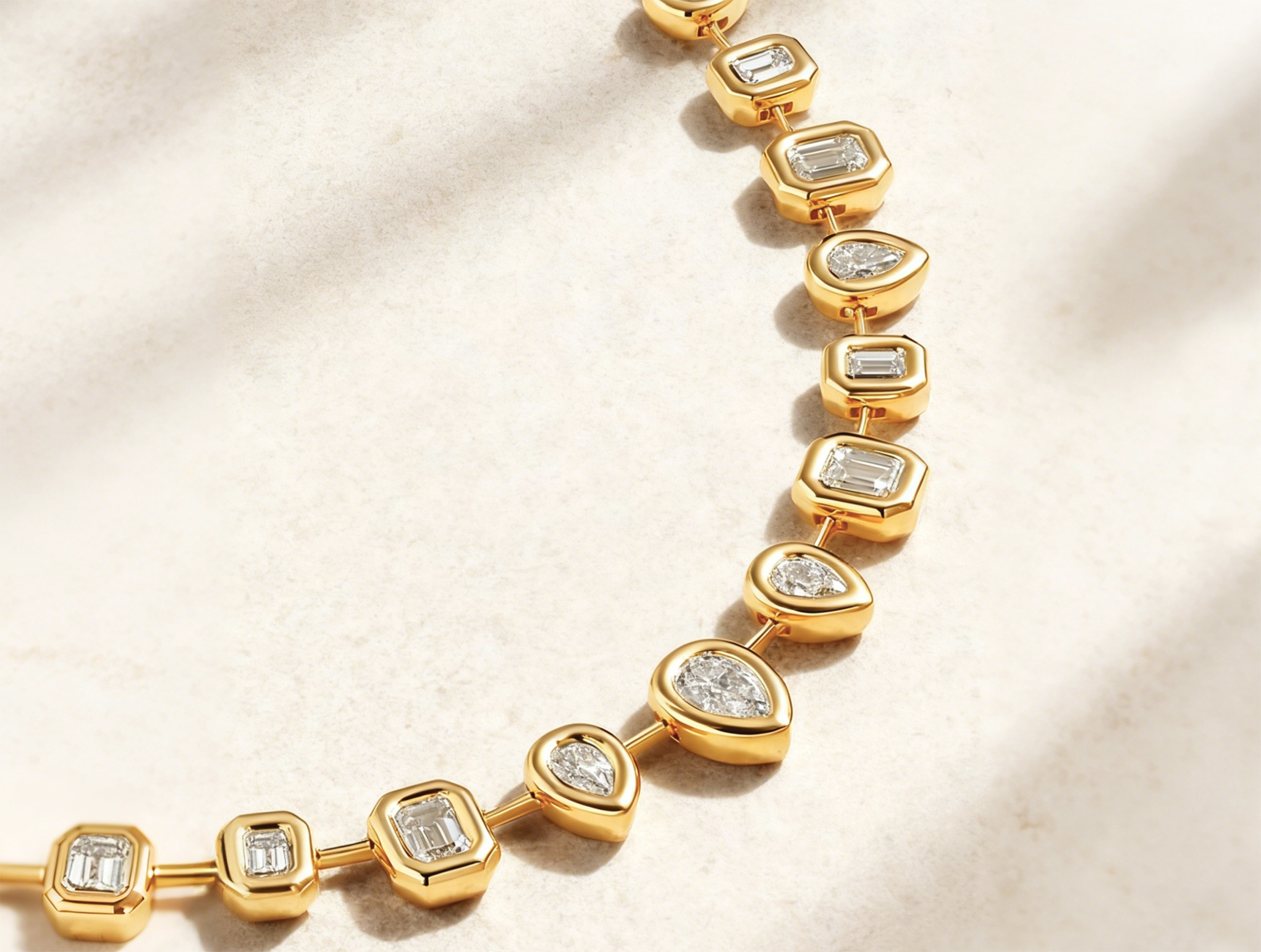
Once stability and appearance are confirmed, the next step is to expand stainless steel use to base chains or core structures.
Modern stainless steel chains, enhanced by PVD technology, can replicate gold, silver, or champagne tones while offering exceptional resistance to wear and oxidation.
After a year of testing, the same brand upgraded the entire bracelet chain to stainless steel —
achieving longer lifespan, lower maintenance, and consistent color across production batches.
This gradual, step-by-step approach helps brands control risk while shaping a steady, confident innovation narrative.
After stainless steel proves reliable in jewelry, brands can extend it to accessories and lifestyle items.
At YIBI, we often recommend clients to begin right here — experimenting with peripheral categories that won’t disrupt their main jewelry line.
Examples include hair clips, brooches, badges, bookmarks, keychains, and decorative bag charms.
These products demand durability and corrosion resistance while maintaining the same visual language and sustainability message as jewelry collections.
For brands managing multiple product tiers, stainless steel provides a way to unify aesthetic and quality standards across all lines.
Material transition is more than a substitution — it requires precision in alloy composition, PVD color tone, and surface finishing.
Collaborating with experienced stainless steel OEM partners ensures color consistency, coating durability, and production accuracy —
all crucial to maintaining brand quality during the transition phase.
Brands don’t have to switch to stainless steel all at once.
Start small, test, refine — and scale gradually.
That’s how many leading brands are redefining their material strategy —
beginning with a single clasp, and transforming the foundation of their craftsmanship.
Luxury today is defined not by rarity, but by relevance and responsibility.
Modern consumers value what lasts, what feels safe, and what aligns with sustainable values.
Stainless steel perfectly embodies this shift:
Stainless steel doesn’t replace artistry — it preserves it.
Among Yibi’s clients, one brand has, over the past two years, made two major material transitions due to fluctuations in market gold prices: first from silver to brass, and then to stainless steel. The brand has now confirmed stainless steel as its core material for product development.
As gold and silver remain volatile, stainless steel offers what modern jewelry truly needs:
stability, scalability, and sustainability — all without aesthetic compromise.
The future of jewelry won’t be defined by what’s most precious,
but by what’s most purposeful.